


Atmospheric Water Tech Arrives as Mediterranean Wells Run Dry
Mediterranean aquifers are failing fast. Next-gen atmospheric water tech promises to extract drinking water from air, but can the energy math balance out?

TL;DR As Southern Europe faces unprecedented groundwater depletion, a new wave of industrial-scale atmospheric water generators is moving from experimental lab prototypes into rural Mediterranean fields. By combining solid-state sorbent materials with localized solar microgrids, companies like Ahbstra are proving that drinking water can be harvested directly from ambient air—though massive scaling issues and thermodynamic energy requirements still remain.
Across the sun-baked olive groves of Andalusia, Sicily, and the Peloponnese, the ground is literally sinking. Centuries-old subterranean aquifers that once cushioned Southern Europe through summer droughts are collapsing under the combined pressures of historical over-extraction, rainfall deficits, and rising global temperatures. In rural agricultural zones, private wells that functioned reliably for generations now yield nothing but muddy, saline sludge.
Traditional infrastructure projects offer little immediate comfort. Desalination plants take close to a decade to permit and build, require sprawling oceanfront footprints, and leave behind toxic brine that threatens local marine ecosystems—a ecological footprint closely monitored by environmental observers like the European Environment Agency. Trucking emergency water into remote villages, meanwhile, is an expensive band-aid that burns fossil fuels to solve a crisis caused by them.
Into this compounding environmental emergency steps a technology long dismissed as a high-cost gimmick: atmospheric water generation (AWG). Once restricted to niche military survival gear or low-yield domestic appliances, a new class of industrial atmospheric harvesting systems—led by hardware pioneers like Ahbstra—is entering the market. By pairing advanced thermodynamic materials with off-grid renewable power, these modular systems aim to produce tens of thousands of liters of clean drinking water per day out of thin ambient air, entirely bypass traditional municipal water grids, and establish a decentralized paradigm for drought resilience.

The Mediterranean Aquifer Collapse Meets Deep-Tech
The current water crisis in the Mediterranean basin is not merely a seasonal shortage; it is a structural tipping point. According to climate modeling from the Intergovernmental Panel on Climate Change, the Mediterranean region is warming 20 percent faster than the global average, driving soil moisture down and evapotranspiration rates up. As freshwater tables sink below economic pumping depths, seawater infiltrates coastal bedrock, permanently contaminating agricultural soils with sodium.
For regional communities, this creates a cruel paradox: even coastal areas surrounded by millions of cubic meters of air holding relative humidity levels of 60 to 80 percent are functionally dying of thirst. The humidity is there, suspended in the warm sea breeze, but natural precipitation pathways have broken down.
This reality has catalyzed a shift in how engineers think about water distribution. Rather than moving heavy fluid across miles of deteriorating pipes or building hyper-centralized coastal desalination facilities, atmospheric water generators treat the sky as a limitless, self-replenishing reservoir. As investment capital shifts toward science breakthroughs in material engineering, atmospheric extraction is transitioning from a fringe energy-hogging experiment into a serious contender for climate-adaptive infrastructure.
The core premise of Ahbstra’s newly deployed modular systems relies on decentralized, point-of-use production. By placing self-contained water units directly adjacent to farms, rural hospitals, and mountain villages, operators bypass the massive capital expenditure and leakage losses—often exceeding 30 percent in aging Southern European pipe networks—that plague traditional public utilities.
How Atmospheric Extraction Works: Condensation vs. Sorbents
To understand why atmospheric water harvesting is suddenly viable when earlier iterations failed, one must look closely at the physics of phase transition. Historically, commercial AWGs operated on mechanical vapor compression—essentially giant, energy-intensive dehumidifiers. They drew in ambient air, ran it across cooling coils powered by standard refrigeration compressors, chilled the air down past its dew point, and collected the resulting condensation.
While mechanical refrigeration works well in tropical environments with relative humidity above 70 percent and air temperatures above 25°C, its efficiency plummets in drier or cooler microclimates. Furthermore, the power required to chill thousands of cubic meters of warm air continuously creates an exorbitant energy footprint, making the water prohibitively expensive.
Ahbstra and the current wave of hardware innovators have fundamentally shifted the thermodynamic process by incorporating solid-state sorbent materials and metal-organic frameworks (MOFs).
Conventional Refrigeration AWG: Ambient Air ---> Compressor Cooling ---> Dew Point Reached ---> Condensation ---> High Power Draw
Solid-State Sorbent AWG (Ahbstra Approach): Ambient Air ---> Sorbent Material Adsorption ---> Solar Thermal Desorption ---> Low-Power Vapor Extraction
Instead of forcing the entire volume of incoming air down to its dew point using electricity-hungry compressors, these modern machines utilize porous, high-surface-area materials that passively adsorb water vapor molecules directly onto their internal matrix, even at relative humidities as low as 20 or 30 percent. Once the sorbent material reaches saturation, a moderate heat source—often supplied directly by integrated solar thermal collectors—desorbs the trapped water vapor into a closed condensation chamber.
By separating the vapor-capture phase from the liquid-condensation phase, sorbent-based architectures drastically reduce the high electrical loads that previously doomed atmospheric water projects.
The Physics of Latent Heat
The core physical constraint of any atmospheric water system remains immutable: the latent heat of vaporization for water is approximately 2.26 megajoules per kilogram. Translating that to utility-scale engineering means that changing water from gas to liquid inevitably requires extracting roughly 0.62 kilowatt-hours of thermal energy per liter, regardless of the mechanical system used.
The breakthrough lies not in breaking the laws of thermodynamics, but in sourcing that required energy passively from the sun while minimizing the parasitic electrical draw needed to run air-handling fans and control electronics.
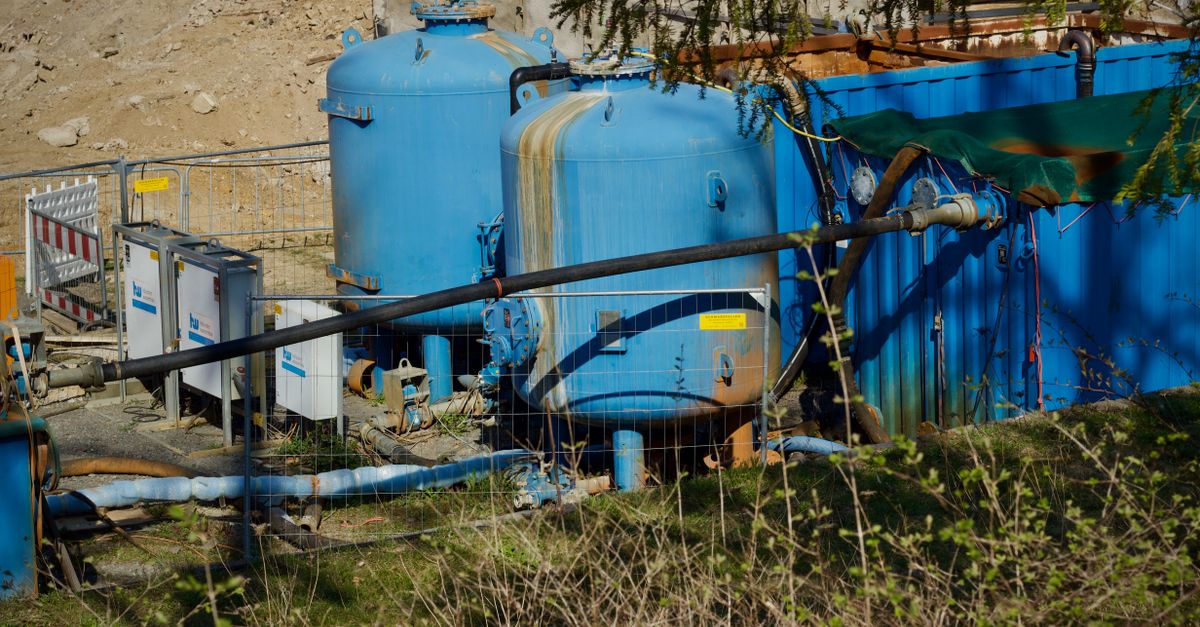 engineer inspecting condensed water filtration system inside industrial hardware container — Photo by Peter Dyllong on Pexels
Benchmarking Water Production: Cost, Energy, and Footprint
To evaluate whether atmospheric water harvesting can truly compete with established water supply solutions, it is essential to compare energy consumption, capital investment, and operational realities across competing technologies.
| Water Supply Technology | Energy Consumption (kWh / 1,000 Liters) | Primary Power Source | Capital Footprint & Infrastructure Requirements | Environmental & Ecosystem Drawbacks |
|---|---|---|---|---|
| Seawater Reverse Osmosis (SWRO) | 3.0 – 4.5 | Grid / Industrial Power | Extremely High (Coastal plants, intake tunnels, distribution mains) | High brine discharge; toxic impact on local marine fauna |
| Deep Aquifer Pumping | 0.8 – 1.8 | Grid / Local Diesel Generators | Low to Moderate (Wellbore drilling, local pumping stations) | Rapid groundwater depletion; land subsidence; soil salinization |
| Emergency Water Trucking | N/A (Fuel: ~15-20L diesel/100km) | Liquid Fossil Fuels | Low initial CapEx, extremely high ongoing operational costs | High carbon emissions; traffic congestion; unsustainable long-term |
| Conventional Compressor AWG | 25.0 – 45.0 | Grid / Microgrid Electricity | Low (Containerized, modular point-of-use units) | Heavy grid draw; high carbon intensity if powered by fossil fuels |
| Next-Gen Sorbent AWG (Ahbstra) | 6.0 – 12.0 (Electric) + Passive Thermal | Solar Photovoltaic + Thermal | Low (Containerized off-grid units, plug-and-play setup) | Minimal land use; zero brine output; high upfront hardware cost |
As the comparison demonstrates, atmospheric harvesting cannot compete with scale-optimized ocean desalination on pure electrical efficiency per liter produced. However, desalination requires massive coastal access, years of environmental permitting, and hundreds of millions of Euros in utility infrastructure to pipe water inland and uphill to drought-stricken interior communities.
When factored against the true cost of building and maintaining long-distance water pipelines across rugged Mediterranean terrain, point-of-use atmospheric generation becomes economically competitive for high-value uses like municipal drinking supplies, eco-tourism resorts, and specialty agriculture.
The Hardware Reality: Dust, Contamination, and Scaling Limits
Despite the technological leaps, scaling hardware in harsh real-world conditions presents severe engineering bottlenecks, raising questions about how venture-backed startups plan to maintain long-term reliability in rural environments.
The main operational hazards facing atmospheric water harvesters deployed in Southern Europe include:
- Particulate Contamination and Dust Loading: Mediterranean winds frequently carry high concentrations of dust, agricultural debris, and fine Saharan sand (calima). Without multi-stage physical air filtration, these particulates clog high-surface-area sorbent matrices and contaminate condensation surfaces.
- Biological and Biofilm Growth: Warm, damp internal collection chambers are ideal breeding grounds for bacteria, algae, and fungi. AWG units must incorporate active ultraviolet (UV-C) sterilization, ozone dosing, and multi-stage carbon filtration systems to keep extracted water safe for human consumption according to WHO standards, as outlined by hydrological monitoring standards from the U.S. Geological Survey.
- Thermal Management Constraints: Sorbent materials must cool down rapidly after being heated to release their moisture. In regions experiencing extreme atmospheric heatwaves (ambient temperatures exceeding 42°C), heat dissipation becomes difficult, reducing the daily cycling speed and overall volume output of the system.
- Mineralization and Taste: Water harvested directly from the atmosphere is essentially distilled water—devoid of minerals. To render it palatable and prevent health issues associated with drinking demineralized water, systems like Ahbstra’s must pass the raw condensate through remineralization cartridges containing calcium and magnesium compounds before final distribution.
Air Intake Filter ---> Sorbent Adsorption Matrix ---> Solar Heat Release ---> Condenser ---> UV-C / Carbon Filter ---> Mineralization Bed ---> Potable Storage
These operational demands mean atmospheric water harvesting units cannot simply be dropped in a field and forgotten. They require active thermal management, routine filter swaps, and periodic sorbent regeneration—operating costs that must be factored into the overall price per liter.
Beyond Emergency Relief: The Decentralized Water Grid
What makes the deployment of industrial atmospheric water units in Southern Europe so compelling is not merely their role as emergency drought relief, but their potential to restructure water infrastructure entirely.
Just as rooftop solar photovoltaic panels decentralized the electrical grid by transforming passive energy consumers into active prosumers, modular atmospheric harvesting can decentralize water production. A village equipped with containerized AWG systems powered by local solar microgrids gains water independence from distant, failing municipal authorities.
This structural shift aligns cleanly with broader trends toward resilient off-grid utilities, paving the way for decentralized infrastructure in the broader future tech ecosystem. When paired with smart sensor networks that optimize water generation cycles based on real-time relative humidity forecasts and electricity pricing, these systems become dynamic assets within a climate-adapted smart grid.
Looking ahead, atmospheric water generation is unlikely to replace municipal water systems entirely in heavily populated metropolis centers. The sheer volume required for dense urban centers—where daily individual consumption often exceeds 150 liters—remains beyond the physical footprint feasible for air-harvesting farms.
However, for rural, island, and hyper-arid microclimates where groundwater is exhausted and traditional infrastructure is non-existent or financially unviable, pulling clean drinking water out of thin air is no longer sci-fi speculation. It is a critical, working component of modern climate adaptation—one thermal unit at a time.
Last updated Aug 9, 2026
InnotechInsider Staff
Newsroom
Reporting and analysis from the InnotechInsider editorial team, covering the technology shaping tomorrow.
Related stories

Shark's ChillPill Discount Highlights a Smarter Way to Cool Down
As summer temperatures soar, localized cooling systems like Shark's ChillPill offer an efficient alternative to central AC. Here is why the latest price drop matters.

Android 17 QPR1 Beta 8 Arrives: Is Google’s Perpetual Beta Broken?
Google drops Android 17 QPR1 Beta 8, fixing fringe Bluetooth bugs while highlighting the absurdities of Silicon Valley's endless software update churn.

Pixel Watch Express Taps Debut in Fresh Google Play Update
Google's latest Play Services update introduces faster transit payments for Pixel Watch while giving Play Store micro-videos a major social makeover.